19 novembre 2026 · Explore Ceylon team · 3 min de lecture
Culture of Sri Lankan wes Muhunu
The Vibrant Culture of Sri Lankan Wes Muhunu.🗿🇱🇰
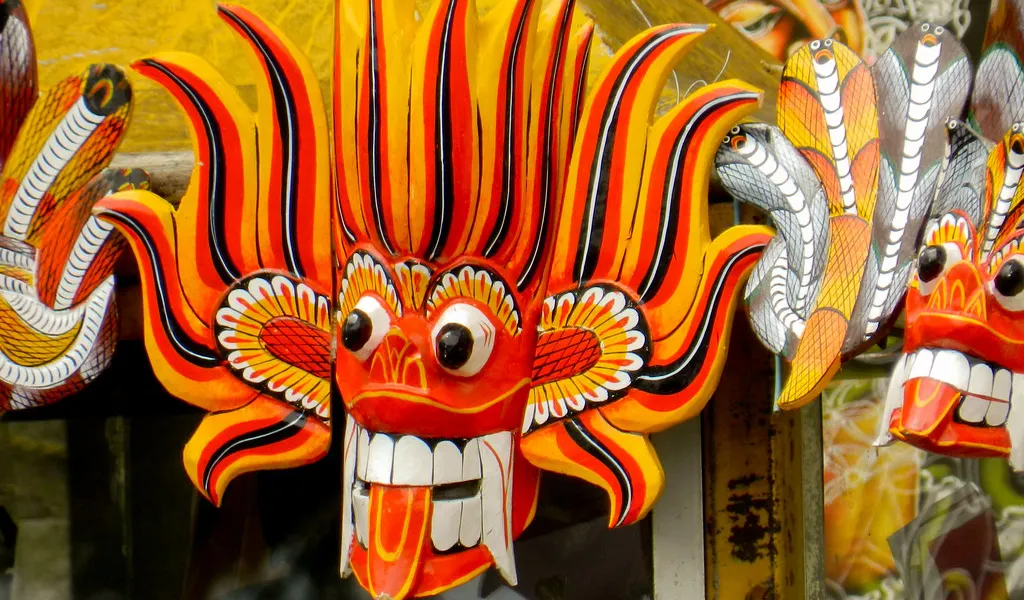
When traveling through the lush southern coast of Sri Lanka, it is impossible to miss the striking, brightly painted wooden masks staring out from roadside workshops and cultural museums. Known locally as Wes Muhunu, these intricate carvings are far more than mere souvenirs—they are living artifacts of an ancient theatrical, spiritual, and healing tradition that continues to captivate visitors from around the world.
The Origins of Sri Lankan Mask Making
The art of carving Wes Muhunu dates back centuries and is deeply rooted in Sri Lankan folklore, indigenous healing rituals, and Buddhism. Traditionally concentrated in the coastal town of Ambalangoda—the undisputed mask-making capital of the island—the craft is passed down through generations of master artisans.
Each mask is hand-carved from the lightweight, durable wood of the Kaduru tree (Strychnos nux-vomica), which grows abundantly in marshy lands. After the wood is dried and smoked to prevent insect damage, artisans spend days chiseling out expressive features before painting them with vibrant natural and mineral pigments of red, yellow, green, black, and white.
The Three Main Categories of Masks
To truly appreciate Wes Muhunu, travelers should understand the three distinct traditions they represent:
- Kolam Masks (Satirical Folk Theatre)
Kolam is a traditional form of masked dance-drama that blends storytelling, music, and sharp social satire. Performers wear exaggerated masks depicting historical figures, royalty, deities, and everyday village characters—such as the village headman, the police officer, or comical elders—to poke fun at human flaws and societal norms.
- Sanni Masks (Ancient Healing Rituals)
In traditional Sri Lankan folk medicine, physical and mental ailments were historically believed to be caused by supernatural demons. The Daha Ata Sanniya (18 Sanni) ritual involves a shamanic exorcism dance where performers wear 18 distinct masks, each representing a specific illness such as blindness, deafness, fever, or madness. Through rhythmic drumming, chanting, and comedic dialogue, the ritual aims to appease the demons and restore balance to the patient.
- Raksha Masks (Mythical Protectors)
Perhaps the most visually dramatic of all are the Raksha (demon) masks, characterized by bulging eyes, protruding fangs, and elaborate headdresses. Originally used in festivals and processions, these masks are today widely displayed in Sri Lankan homes and businesses to ward off evil spirits and bring good fortune. Popular designs include:
• Naga Raksha (Cobra Demon): Adorned with a crown of hooded cobras, symbolizing protection and strength.
• Gara Yakka: A benevolent demon invoked to banish the "evil eye" and bring prosperity.
• Mayura Raksha (Peacock Demon): Celebrated for bringing peace, harmony, and wealth.
Where to Experience Mask Culture in Sri Lanka
For travelers looking to immerse themselves in this fascinating heritage, a visit to Ambalangoda (located between Bentota and Hikkaduwa) is a must:
• Ariyapala & Sons Mask Museum: Established by a family of traditional mask carvers, this museum showcases a remarkable collection of antique masks alongside an active workshop where you can watch artisans at work.
• Local Workshops & Galleries: Strolling through Ambalangoda allows you to interact directly with master craftsmen, learn about the symbolism behind specific colors and expressions, and purchase authentic, hand-carved pieces directly from the makers.
Explore the Beauty of Sri Lanka with Explore Ceylon
Whether you are drawn to the theatrical charm of Kolam, the spiritual depth of Sanni, or the fierce beauty of a Naga Raksha, exploring the world of Wes Muhunu offers an unforgettable window into Sri Lanka’s soul.
Join us to explore this breathtaking beauty and rich cultural heritage of Sri Lanka! At Explore Ceylon, we craft private, tailor-made journeys designed around your pace and passions—from authentic artisan workshops along the southern coast to iconic cultural landmarks across the island.
Visit Explore Ceylon today to start planning your personalized Sri Lankan adventure with our local travel experts!
Culture & Mask
#WesMuhunu #SriLankanMasks #Ambalangoda #RakshaMask #Kolam #SanniYakuma #SriLankanHeritage #TraditionalArt #HandCarved #SriLankaCulture
#ExploreCeylon #VisitSriLanka #SriLankaTravel #TailorMadeTours #PrivateToursSriLanka #DiscoverSriLanka #CeylonCulture #SouthCoastSriLanka #CulturalTravel #TravelSriLanka
Continuer la lecture